



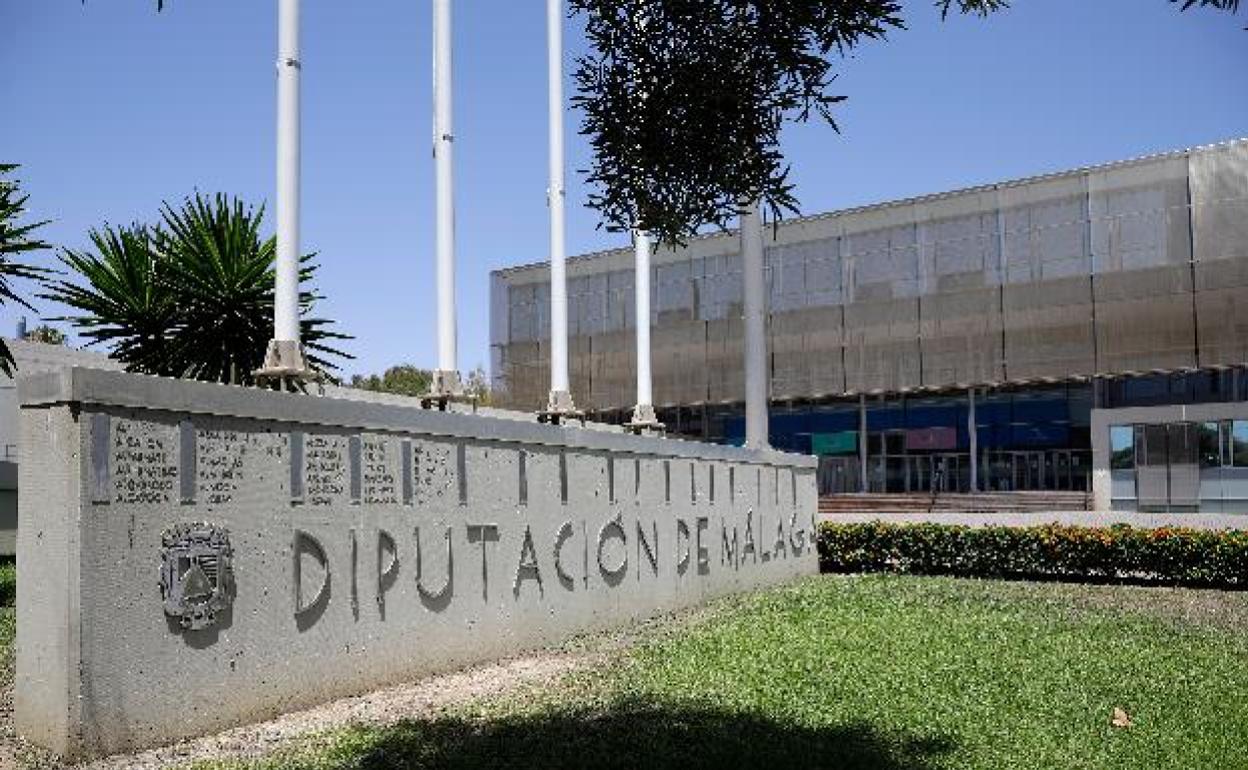
Most residents are familiar with their local town hall, or ayuntamiento, but many are less clear about the role of the Diputación Provincial de Málaga. Although it is not as visible in daily life as a local council, the Diputación plays an important part in how the province functions, especially in supporting smaller municipalities and coordinating services that go beyond the boundaries of a single town.
The Diputación is the provincial authority for Málaga. It sits between local town halls and the wider regional and national administrations, helping to ensure that all municipalities in the province have access to essential services, technical support and funding. In simple terms, while an ayuntamiento looks after the day-to-day needs of one municipality, the Diputación works across the whole province.
Málaga province is made up of 103 municipalities, ranging from large urban centres such as Málaga city, Marbella, Mijas, Vélez-Málaga and Estepona to small inland villages with only a few hundred residents. These municipalities have very different levels of population, income, staff and administrative capacity. One of the main purposes of the Diputación is to help balance those differences so that residents in smaller or less well-resourced towns are not left behind.
A small village may not have the same technical department, legal team, IT resources or financial capacity as a large coastal town. The Diputación helps bridge that gap by providing legal, economic and technical assistance to town halls, particularly those with fewer resources. This can include help with public works, administrative procedures, municipal finance, digital services, training and support for local projects.
Another key role is the coordination of services that affect more than one municipality. Some issues do not stop at town boundaries. Roads, water infrastructure, waste treatment, fire prevention, tourism promotion, environmental protection and rural development often require a broader provincial approach. The Diputación can help organise or fund these services so that they are delivered more efficiently across several towns.
The Diputación also manages provincial investment plans. These programmes provide money to municipalities for local improvements such as road repairs, water supply projects, public buildings, sports facilities, cultural spaces, accessibility works and other municipal infrastructure. In many smaller towns, these funds can make the difference between a project being possible or remaining on a waiting list for years.
In recent years, water has become one of the clearest examples of why provincial coordination matters. Drought, ageing pipes and pressure on supply affect communities across Málaga, from the coast to the inland villages. The Diputación has supported projects aimed at improving water efficiency, repairing networks, reducing losses and modernising systems in municipalities across the province.
The institution also has an important role in digital administration. Many smaller town halls need support to provide online procedures, electronic records, digital signatures, transparency portals and modern communication systems. By offering shared technology and administrative support, the Diputación helps residents in smaller towns access public services in a more modern and efficient way.
Tourism and culture are also part of its work. Málaga is often known internationally for the Costa del Sol, but the province includes inland villages, natural parks, historic towns, walking routes, gastronomy, festivals and cultural heritage. The Diputación helps promote the province as a whole, encouraging visitors to look beyond the main coastal resorts and helping smaller municipalities benefit from tourism.
The Diputación is also involved in social policies, support for older people, equality programmes, cultural initiatives, sports, employment projects and assistance to local associations. Some of these services are delivered directly, while others are funded or coordinated in partnership with town halls, the Junta de Andalucía, the Spanish Government or European programmes.
Politically, the Diputación is not elected in the same direct way as a town hall. Residents vote in municipal elections for their local councillors. The make-up of the provincial Diputación is then determined indirectly, based on the results of those municipal elections across the province. The provincial deputies represent political parties and areas of the province, and the institution is led by a president.
For ordinary residents, the Diputación may feel distant, but its impact is often seen in very practical ways: improved roads, better water infrastructure, support for local councils, cultural programmes, tourism campaigns, digital services, social care funding and investment in public facilities. Much of its work happens behind the scenes, but it helps keep many local services running, particularly in smaller municipalities.
The easiest way to understand the Diputación is to see it as a support structure for the province. It does not replace local town halls, and it does not have the same role as the Junta de Andalucía or the Spanish Government. Instead, it helps municipalities work better, supports projects that are too large or complex for one town alone, and aims to ensure a fairer distribution of services and investment across the province.
In a province as varied as Málaga, with busy coastal towns, growing urban areas and small inland villages, that coordinating role is essential. The Diputación’s work may not always be obvious, but it is a key part of the machinery that keeps the province connected, funded and functioning.